
Discover the Pearl of Africa — where mountain gorillas, sweeping savannahs, and the source of the Nile converge in one extraordinary destination.
Tucked into the heart of East Africa, Uganda safaris is one of the continent’s most rewarding and underrated safari destinations. Nicknamed “The Pearl of Africa” by Sir Winston Churchill, who visited in 1907 and was captivated by its lush landscapes and extraordinary biodiversity, Uganda offers an experience unlike any other on the continent. While Kenya and Tanzania dominate safari conversations, Uganda quietly holds its own with a staggering array of wildlife, primates, and ecosystems — all within a compact, accessible geography.
From the misty, ancient forests of Bwindi Impenetrable National Park, home to roughly half of the world’s remaining mountain gorillas, to the sprawling savannahs of Queen Elizabeth National Park teeming with lions, elephants, and hippos, Uganda rewards every type of traveller. Add to this the thundering cascades of Murchison Falls, the primate sanctuaries of Kibale Forest, and the glittering expanse of Lake Victoria — the world’s largest tropical lake — and it becomes clear why Uganda is rapidly ascending on the global safari map.
This guide covers everything you need to plan a memorable Uganda safari: the top parks and experiences, the best seasons to visit, what to budget, and practical advice for making the most of your journey.
Top Destinations for Uganda Safaris
1. Bwindi Impenetrable National Park
No Uganda and Kenya safaris is complete without a visit to Bwindi. A UNESCO World Heritage Site, this ancient rainforest in southwestern Uganda shelters approximately 459 mountain gorillas — around half the global population. Gorilla trekking here is a bucket-list experience: guided groups of up to eight visitors spend up to one hour with a habituated gorilla family, observing their social dynamics, feeding behaviours, and interactions in their natural habitat.
The trek itself can range from a gentle two-hour walk to a strenuous full-day hike through dense forest, depending on the gorilla family’s location. Either way, the reward is immeasurable. Bwindi also harbours extraordinary biodiversity beyond gorillas, including 350 bird species and 120 mammal species.
2. Queen Elizabeth National Park
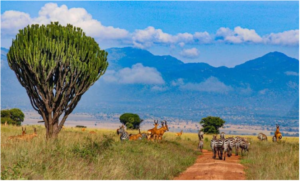
Uganda’s most visited national park, Queen Elizabeth stretches across the Albertine Rift Valley in the southwest and encompasses an astonishing variety of ecosystems: savannah, wetlands, forests, and the scenic Kazinga Channel — a natural waterway connecting Lakes George and Edward.
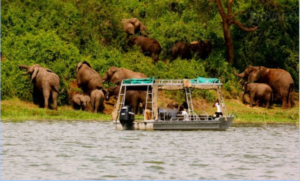
The park is famous for its tree-climbing lions, a rare behaviour observed in only a handful of locations worldwide. Boat cruises along the Kazinga Channel offer close encounters with hippos, crocodiles, and hundreds of waterbirds. The Ishasha sector in the south is the best place to spot these unusual feline climbers lounging in fig trees.
3. Murchison Falls National Park
Uganda’s largest national park sits in the northwest and is anchored by one of nature’s most dramatic spectacles: the Nile River, at its mightiest, is forced through a narrow eight-metre gorge before plunging 45 metres into a churning pool below — creating the immensely powerful Murchison Falls.
Game drives across the northern bank reveal large populations of elephants, giraffes, buffalos, lions, and leopards. Boat safaris to the base of the falls provide thrilling encounters with Nile crocodiles and pods of hippos. The park is also a prime birding destination, with the rare shoebill stork found in the wetlands of the southern bank.
4. Kibale National Park
Kibale is the primate capital of the world. Home to 13 primate species, it offers the best chimpanzee tracking experience in Africa. Habituated chimp communities have been studied for decades, making for intimate and educational encounters. The park also harbors red colobus monkeys, olive baboons, and L’Hoest’s monkeys.
Kibale connects to Queen Elizabeth National Park via the Kibale–Queen Elizabeth corridor, allowing wildlife to move freely between ecosystems — making it easy to combine both parks in a single itinerary.
5. Mgahinga Gorilla National Park
Smaller and less visited than Bwindi, Mgahinga occupies the Ugandan section of the Virunga Mountains — a volcanic chain shared with Rwanda and the Democratic Republic of Congo. It offers gorilla trekking as well as golden monkey trekking and volcano hikes to the summits of Mount Gahinga, Mount Sabinyo, and Mount Muhabura.
Best Time to Visit Uganda
Uganda straddles the equator and has a relatively stable climate year-round, but two dry seasons offer the most comfortable safari conditions:
Primary Dry Season: June – August This is peak safari season. Vegetation is lower, wildlife concentrates around water sources, and roads are accessible. Gorilla trekking permits sell out months in advance during this period.
Secondary Dry Season: December – February A shorter dry window that is excellent for wildlife viewing and gorilla trekking. Fewer crowds than the June–August peak.
Wet Seasons: March–May and September–November Heavy rains make forest trails muddy and roads challenging, but prices are lower and parks are less crowded. Birding is particularly rewarding as migratory species arrive.
Safari Costs and Budgeting
Uganda and Congo safaris can be experienced across a broad range of budgets:
| Budget Tier | Daily Cost (Per Person) | Accommodation Style |
| Budget | $100 – $200 | Guesthouses, basic camps |
| Mid-range | $250 – $450 | Comfortable lodges |
| Luxury | $500 – $1,000+ | Premium lodges, exclusive camps |
Key costs to factor in:
- Gorilla trekking permit: $800 USD per person (booked through Uganda Wildlife Authority)
- Chimpanzee trekking permit: $250 USD per person
- Park entrance fees: $40–$45 USD per day, per park
- International flights: Entebbe International Airport (EBB) is the main gateway
- Internal transfers: Road or charter flights between parks
Practical Safari Tips
Book gorilla permits early. Permits are limited to 96 per day across all of Bwindi’s gorilla families. During peak season, permits sell out 6–12 months in advance. Book directly through the Uganda Wildlife Authority or via a reputable tour operator.
Pack appropriately for forest trekking. Sturdy, waterproof hiking boots, long-sleeved shirts, and insect repellent are essential for forest activities. Garden gloves protect hands when grasping vegetation on steep terrain.
Get vaccinations in advance. Yellow fever vaccination is mandatory for entry into Uganda. Typhoid, hepatitis A, and malaria prophylaxis are strongly recommended.
Hire a local guide. Beyond Bwindi forest national park rangers, local community guides enrich cultural encounters and support local livelihoods. Uganda has a vibrant eco-tourism community eager to share their heritage.
Respect wildlife protocols. When trekking with gorillas or chimps, maintain the required minimum distance, avoid flash photography, and follow all ranger instructions. This protects both animals and visitors.
Questions & Answers
Q: How difficult is gorilla trekking in Uganda? A: The difficulty varies significantly depending on where the gorilla family is located on any given day. Treks can last between 30 minutes and 8 hours. The terrain in Bwindi is steep and dense, so a reasonable level of fitness is advisable. Porters are available for hire, which supports local communities and makes the trek more manageable.
Q: Is Uganda safe for tourists? A: Yes. Uganda safaris is generally considered safe for tourists, particularly in national park areas. The tourism sector is well-established, and major parks have professional rangers and security infrastructure. As with any destination, standard travel precautions apply — avoid displaying valuables, travel with a reputable operator, and register with your country’s embassy if undertaking remote expeditions.
Q: How long should I spend on a Uganda safari? A: A minimum of 7–10 days allows you to experience gorilla trekking and one or two additional parks. Fourteen days is ideal for combining Bwindi, Queen Elizabeth, Kibale, and Murchison Falls in a comprehensive circuit. Shorter trips of 4–5 days are possible if focusing solely on Bwindi or Kibale.
Q: Can I combine a Uganda safari with Rwanda? A: Absolutely — this is one of the most popular East African itineraries. Both countries share the Virunga mountain ecosystem, and the Kigali–Bwindi route is well-trodden. Rwanda offers the Volcanoes National Park for gorilla trekking, and the two countries complement each other beautifully in terms of culture, history, and wildlife.
Q: What is the difference between gorilla trekking in Uganda vs Rwanda? A: Uganda’s permits are significantly cheaper ($800 vs Rwanda’s $1,500), and Uganda has a larger gorilla population across more trekking sectors. Rwanda, however, offers more premium luxury infrastructure and is more compact geographically. Many travellers choose Uganda for gorilla trekking on a value basis and visit Rwanda for its cultural and historical sites.
Q: What currency does Uganda use, and can I use credit cards? A: Uganda uses the Ugandan Shilling (UGX). USD cash is widely accepted at lodges, permit offices, and major services. Credit cards are accepted at upscale establishments in Kampala and larger lodges, but rural areas and smaller operators prefer cash. Carry sufficient USD in small denominations.
Key Takeaways
- Mountain gorilla trekking in Bwindi Impenetrable National Park is Uganda’s flagship experience and one of the world’s most profound wildlife encounters.
- Uganda is home to over 1,000 bird species, making it one of the top birding destinations on Earth.
- The country has 10 national parks and several wildlife reserves, offering diverse ecosystems from savannah to tropical rainforest.
- Chimpanzee tracking in Kibale National Park offers exceptional primate encounters alongside golden monkeys and L’Hoest’s monkeys.
- Uganda’s tourism infrastructure has improved significantly, with luxury lodges now available in most major national parks.
- The best time to visit for gorilla trekking is during the dry seasons: June–August and December–February.
- A gorilla trekking permit costs $800 USD per person — one of the most significant expenses to factor into your budget.
- Uganda and Rwanda safaris‘ compact geography allows travellers to combine multiple parks into a single two-week itinerary.
Conclusion
Uganda and Tanzania safaris is a destination of extraordinary depth and diversity. Few places on earth offer the combination of primate encounters, savannah wildlife, dramatic landscapes, and genuine cultural warmth that Uganda delivers. The country’s relative anonymity compared to more established destinations is, paradoxically, one of its greatest strengths — national parks are less crowded, wildlife encounters feel more intimate, and the sense of discovery remains vivid.
Whether you are moved to near-silence in the presence of a mountain gorilla family in Bwindi’s misty forest, or stunned by the raw power of the Nile cascading through Murchison Falls, or simply delighted by the chorus of 1,000 bird species greeting the equatorial dawn — Uganda leaves a mark that stays with you long after you return home.
The Pearl of Africa is waiting. Now is the time to discover it.

